Swing Gates vs Sliding Gates: Which Is Best for Your Driveway?
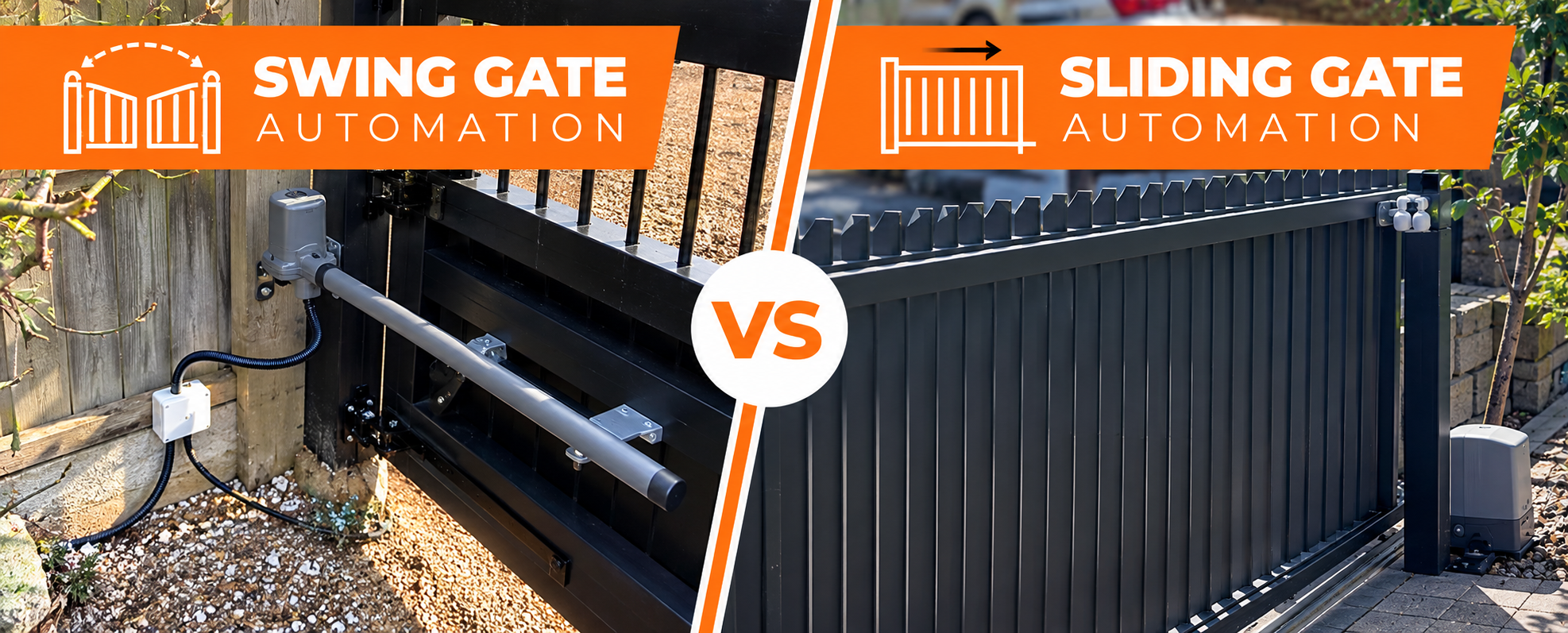
Choosing between swing gates and sliding gates is one of the first decisions when planning an electric gate system.
Both can provide convenience, security and an attractive entrance to your property. However, the right choice depends on more than appearance.
The size of your entrance, available space, driveway slope and ground conditions all influence which type of gate will work best.
In this guide, we'll look at the main differences between swing and sliding gates, helping you decide which option is most suitable for your property and what to consider when choosing an automation system.
What's the Difference Between Swing and Sliding Gates?
Swing gates open on hinges, much like a traditional garden gate. They can consist of a single gate leaf or two leaves that meet in the middle.
Sliding gates move horizontally across the entrance, running along a track or using a cantilever system that supports the gate above the ground.
Both types can be automated, but they require different motors and installation arrangements.
Swing Gates vs Sliding Gates: At a Glance
| Consideration | Swing Gates | Sliding Gates |
| Opening Movement | Swing inward or outward | Slide sideways |
| Space required | Clear opening arc | Clear space beside entrance |
| Sloping driveways | Can be challenging | Often more suitable |
| Wide entrances | Double gates often suitable | Well suited to wide openings |
| Ground requirements | Strong posts and hinges | Suitable track or cantilever foundations |
| Installation | Often less groundwork | May require additional groundwork |
| Automation | Above-ground or underground motors | Rack-and-pinion motor |
Neither option is automatically better. The best choice depends on the layout of your driveway and how you intend to use the gates.
1. Consider the Slope of Your Driveway
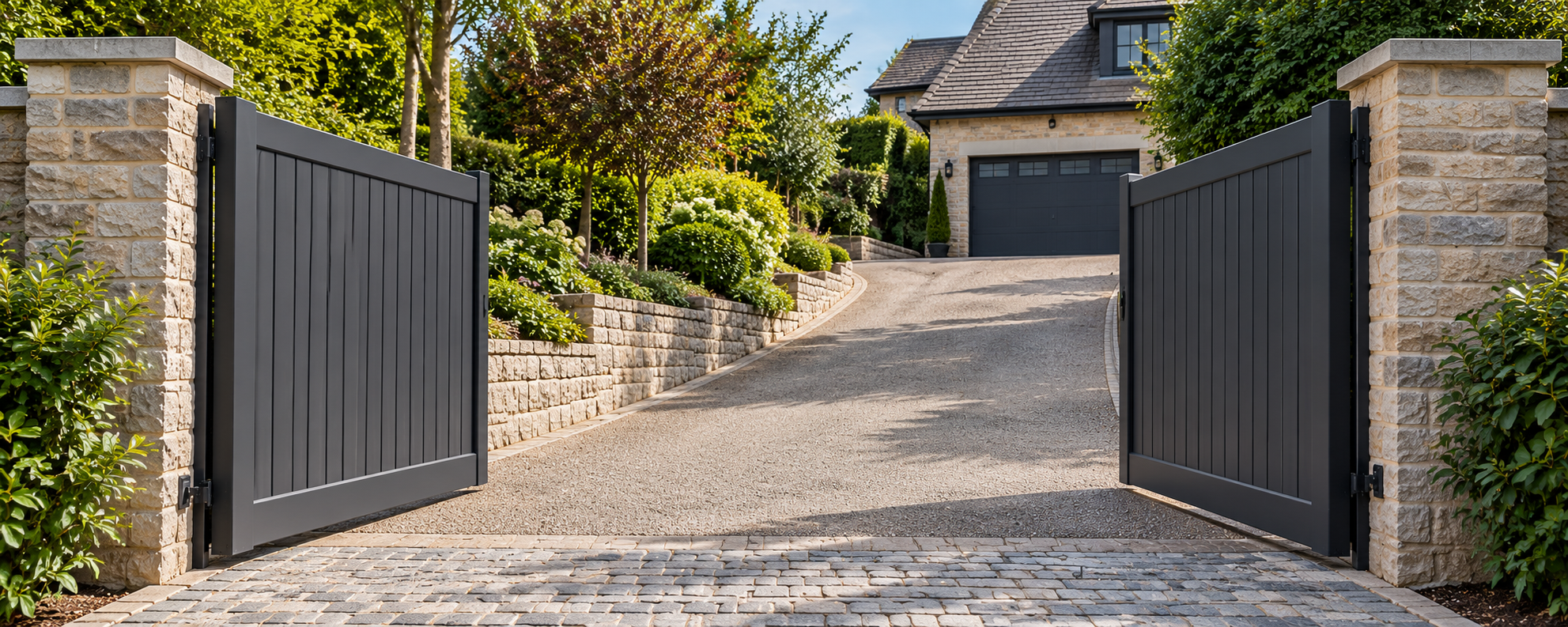
One of the most important factors is whether your driveway is level or slopes upwards from the entrance.
Swing gates need enough ground clearance to move through their opening arc. If your driveway rises behind the gates, they may catch against the ground when opening inward.
Depending on the installation, adjustments to the gate design, hinge arrangement or opening direction may be possible. However, these solutions aren't always practical.
Sliding gates can be particularly useful on sloping driveways because they move sideways rather than swinging across the rising ground.
Our advice: If your driveway slopes upwards from the entrance, it's worth investigating whether a sliding gate would be a more practical option.
Remember that sliding gates still need a suitable, correctly aligned path along the boundary.
2. How Much Space Do You Have?
Both gate types require sufficient space to operate safely, but they use that space differently.
Space Required for Swing Gates
Swing gates need a clear area for the gate leaves to open.
For example, if you have a pair of swing gates, each leaf needs enough space to complete its opening movement without hitting vehicles, walls or other obstructions.
This is particularly important for shorter driveways where vehicles may be parked close to the entrance.
Swing gates generally open inward onto private property. Outward-opening gates require careful consideration, particularly near roads and public footpaths, where they must not create an obstruction or hazard.
Space Required for Sliding Gates
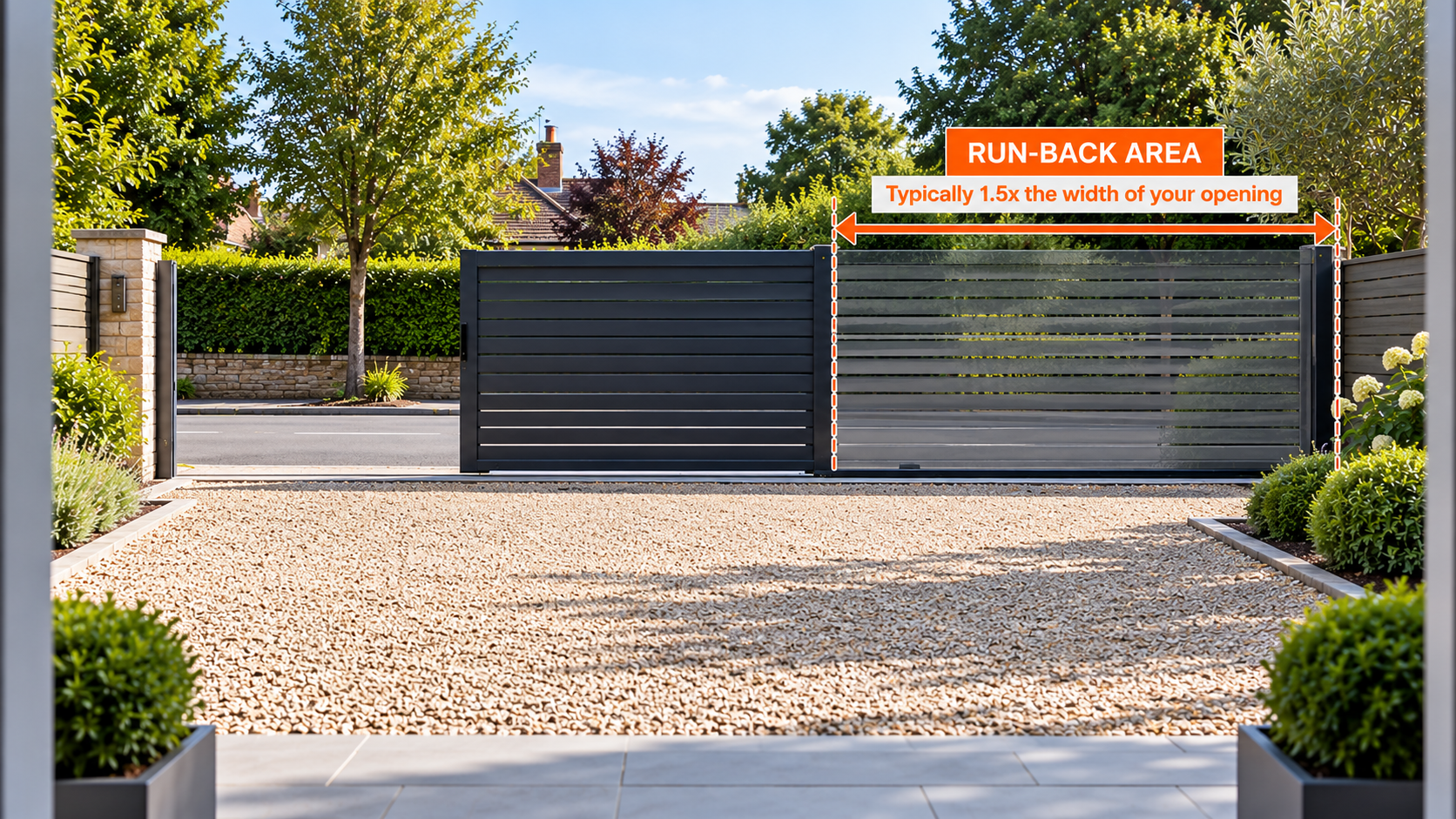
Sliding gates require clear space to one side of the entrance, commonly referred to as the run-back area.
The amount of space required depends on the gate design and whether it uses a tracked or cantilever system.
Cantilever gates typically need additional space for their counterbalance section.
If your entrance has a long, unobstructed boundary wall or fence, a sliding gate could be a practical solution.
Our advice: Measure the available space around your entrance, not just the width of the opening. This will help establish which gate arrangement is realistic.
3. Does the Width of Your Entrance Matter?
Yes. The width of your entrance can influence both the gate design and the automation equipment required.
Swing gates are commonly installed as a pair across wider entrances, reducing the width and weight carried by each individual gate leaf.
Sliding gates can also be suitable for wider openings, provided there is enough space for the gate to retract fully.
Whichever type you choose, the gate's dimensions and weight are important when selecting an automation system.
A motor must be suitable for the size, weight, installation geometry and expected usage of the gate.
GateMotors offers a useful Gate Weight Estimator to help with the initial planning process.
4. Think About the Ground Conditions
The condition of the ground and surrounding structures can affect the installation.
Swing gates rely on secure posts, suitable foundations and correctly installed hinges to support the weight of the gate leaves.
Tracked sliding gates require a firm, appropriately level track installation, together with suitable support and guidance.
Uneven ground, loose surfaces and poor drainage can create additional challenges.
For properties where a ground track isn't practical, a cantilever sliding gate may be worth considering. These systems support the gate above the ground, avoiding the need for a track across the entrance.
However, cantilever systems require suitable foundations and additional space for the gate's counterbalance.
5. What About Wind and Exposed Locations?
Wind exposure is another consideration, particularly for properties in open countryside or coastal locations.
Solid gates can experience significant wind loading, which places additional strain on the gate structure and automation system.
Swing gates may be particularly affected when wind acts against their opening or closing movement, but sliding gates must also be designed to withstand wind forces.
Gate designs with gaps between the infill, such as railings or spaced slats, can help reduce wind resistance.
If your property is particularly exposed, it's important to consider wind loading when choosing both the gate design and motor.
6. Which Type of Gate Is Easier to Automate?
Both swing and sliding gates can be automated successfully, provided the gates are suitable and the correct equipment is selected.
Automating Swing Gates
Swing gates can use several types of automation, including:
- Linear or ram motors: Mounted between the gate and post, commonly used for many residential swing gate installations.
- Articulated arm motors: Often suitable for installations with larger gate pillars or particular hinge arrangements.
- Underground motors: Installed beneath the gate hinge point, offering a more discreet appearance.
Explore our Single Swing Gate Automation Kits and Double Swing Gate Automation Kits.
Automating Sliding Gates
Sliding gates generally use a motor installed beside the entrance.
The motor drives a toothed rack attached to the gate, moving it horizontally along its opening and closing path.
When selecting a sliding gate motor, you'll need to consider the gate's weight, dimensions, operating conditions and frequency of use.
Explore our Sliding Gate Automation Kits.
7. Don't Forget Gate Safety
Whether you choose swing or sliding gates, safety should be considered from the beginning of the project.
Automated gates are machinery and must be designed, installed and maintained to operate safely.
Potential hazards include crushing, trapping, impact and shearing points around the moving gate.
Depending on the installation and its risk assessment, appropriate safety measures may include photocells, safety edges, force limitation and other protective devices.
A suitable risk assessment is essential to identify the hazards and determine the protection required.
If you're planning a new installation, we recommend seeking advice from a competent gate installer to ensure the complete system is safe and suitable for its intended use.
Swing Gates or Sliding Gates: Which Should You Choose?
If you're still unsure, consider these common situations.
A short driveway with limited parking space
A sliding gate may be worth considering because it doesn't need to swing into the driveway, provided there's enough room along the boundary.
A driveway with limited space beside the entrance
Swing gates may be more practical if there's sufficient space for the gate leaves to open safely.
A driveway that slopes upwards
Sliding gates can often provide a more suitable solution, particularly where inward-opening swing gates would struggle with ground clearance.
A wide property entrance
Both double swing gates and sliding gates may be suitable. The available space, gate construction and installation requirements will help determine the best option.
Ultimately, the right choice depends on your property's layout and the type of gate you want to automate.
Frequently Asked Questions
Are swing gates cheaper than sliding gates?
Swing gates can sometimes be less expensive to install, particularly where suitable posts and foundations already exist.
Sliding gates may require additional groundwork, tracks or support structures.
However, the overall cost depends on the gate design, size, installation requirements and automation equipment.
Can you install electric gates on a sloping driveway?
Yes, although the slope may influence which gate type is suitable.
Sliding gates can be a practical option where an uphill driveway restricts the movement of inward-opening swing gates.
How much space does a sliding gate need?
A sliding gate needs sufficient space beside the entrance to retract fully.
The exact amount depends on the gate's overall length and whether it uses a tracked or cantilever system.
Can existing swing or sliding gates be automated?
In many cases, yes.
Existing gates may be suitable for automation provided they're structurally sound, correctly aligned and capable of moving smoothly.
The gate's weight, dimensions and installation arrangement must also be suitable for the chosen motor.
Are swing gates or sliding gates safer?
Neither type is inherently safer in every situation.
Both have potential hazards that must be identified and addressed through appropriate design, installation and safety measures.
Still Unsure Which Gate Type Is Right for You?
Choosing between swing and sliding gates comes down to your property's layout, available space and installation requirements.
If you're planning to automate your gates and aren't sure where to start, the GateMotors team is here to help.
Get in touch for advice on choosing a suitable automation system for your project.