Can I Automate My Existing Gates?
Yes, in many cases, existing gates can be automated without replacing them. The key is making sure the gates are structurally sound, correctly aligned and suitable for the type of automation you want to install.
Many timber, steel and wrought iron gates can be retrofitted with electric gate motors, allowing you to add the convenience and security of automation while keeping your existing gates.
Before choosing a motor, however, there are a few important things to check.
What Types of Existing Gates Can Be Automated?
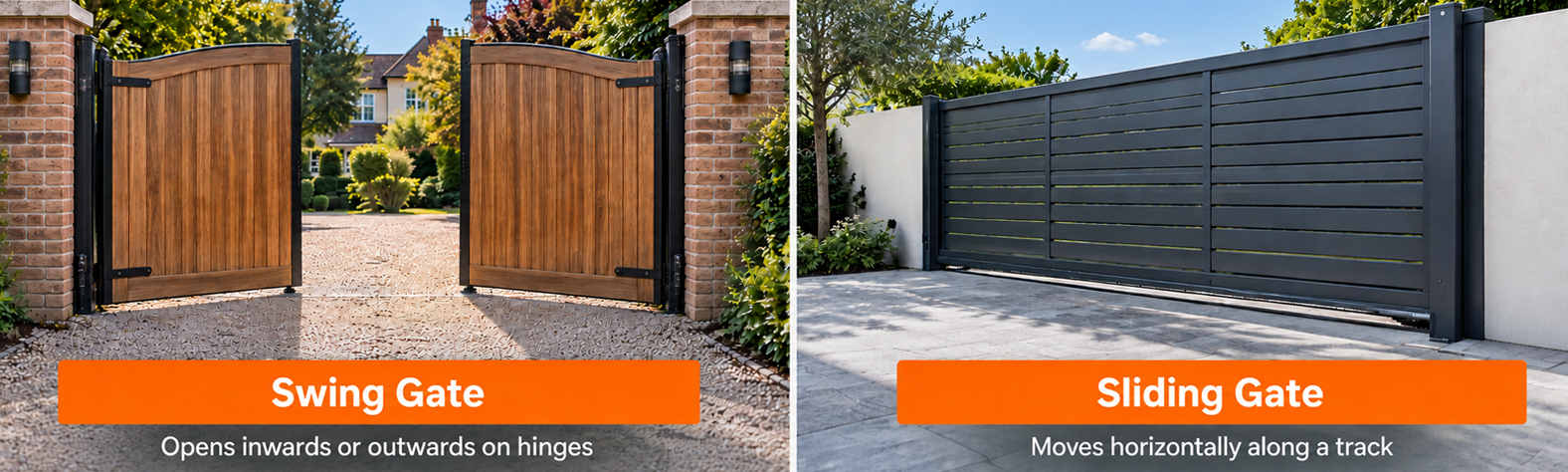
Both swing and sliding gates can usually be automated. Timber, steel and wrought iron swing gates can be fitted with underground, linear or articulated arm motors depending on their size, weight and installation geometry.
Existing sliding gates can also be automated, provided they run smoothly and the structure is suitable. These typically use a motor positioned beside the gate, with a toothed rack attached to the gate itself.
How Do I Know If My Existing Gates Can Be Automated?
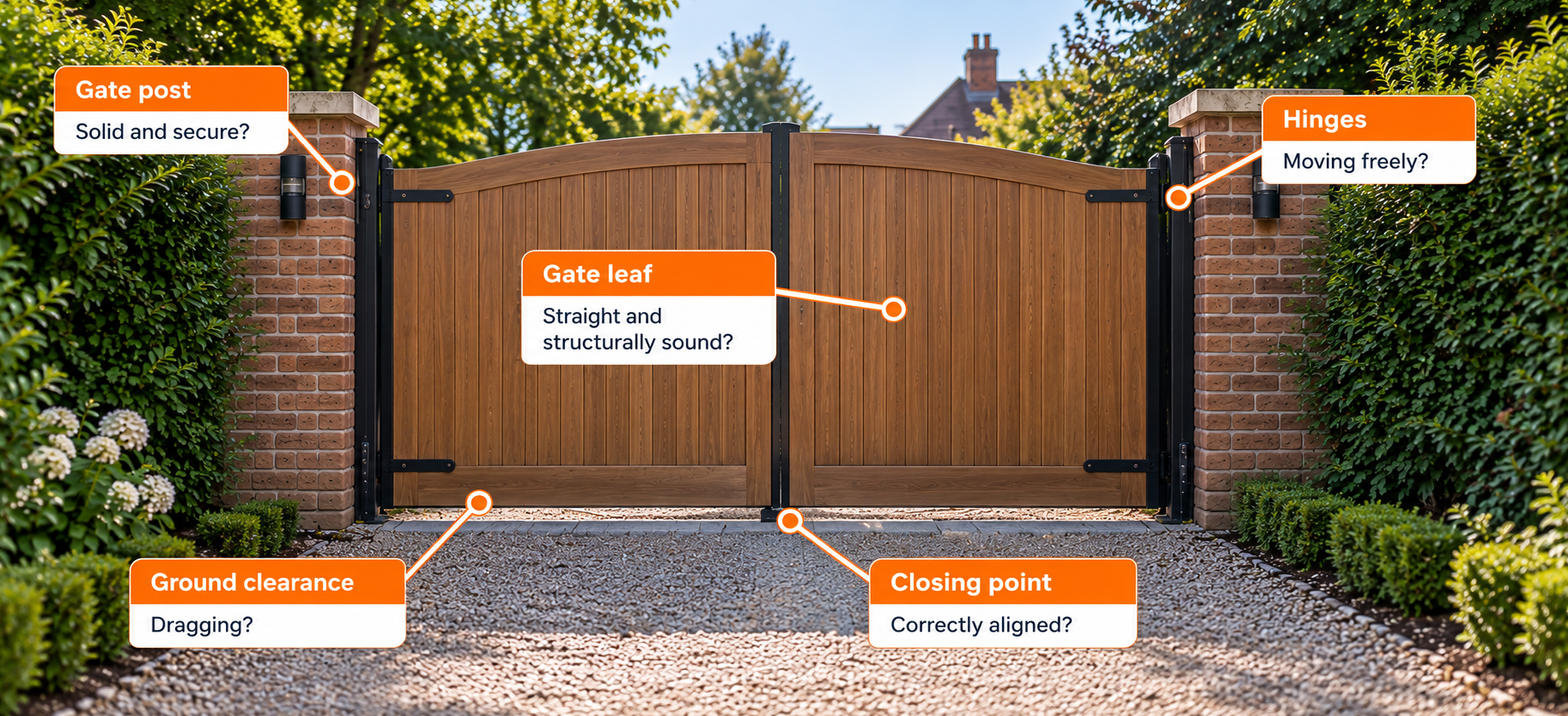
Your existing gates could be suitable for automation if:
- They open and close smoothly by hand
- The posts are solid and secure
- The hinges, wheels or rollers are in good condition
- The gates aren't badly warped or sagging
- There is sufficient room for the motor
- A suitable power supply can be provided
A good rule of thumb: if a gate is difficult to operate manually, adding a motor won't solve the underlying problem. Mechanical or structural issues should be corrected before automation is installed.
What Modifications Might Be Needed?
Finding a problem doesn't necessarily mean your gates can't be automated. In many cases, relatively small improvements can make an existing gate suitable.
A sagging gate may need its hinges adjusting or replacing, while weak mounting points or posts may need reinforcement. Gate stops may need to be installed, and the gate alignment should be corrected before a motor is fitted.
Safety equipment will form part of the overall installation too. Depending on the system and risk assessment, this could include devices such as photocells and safety edges.
If the gate is badly rotten, heavily corroded or structurally damaged, replacement may be more sensible than investing in repairs and automation.
Which Type of Gate Motor Do I Need?
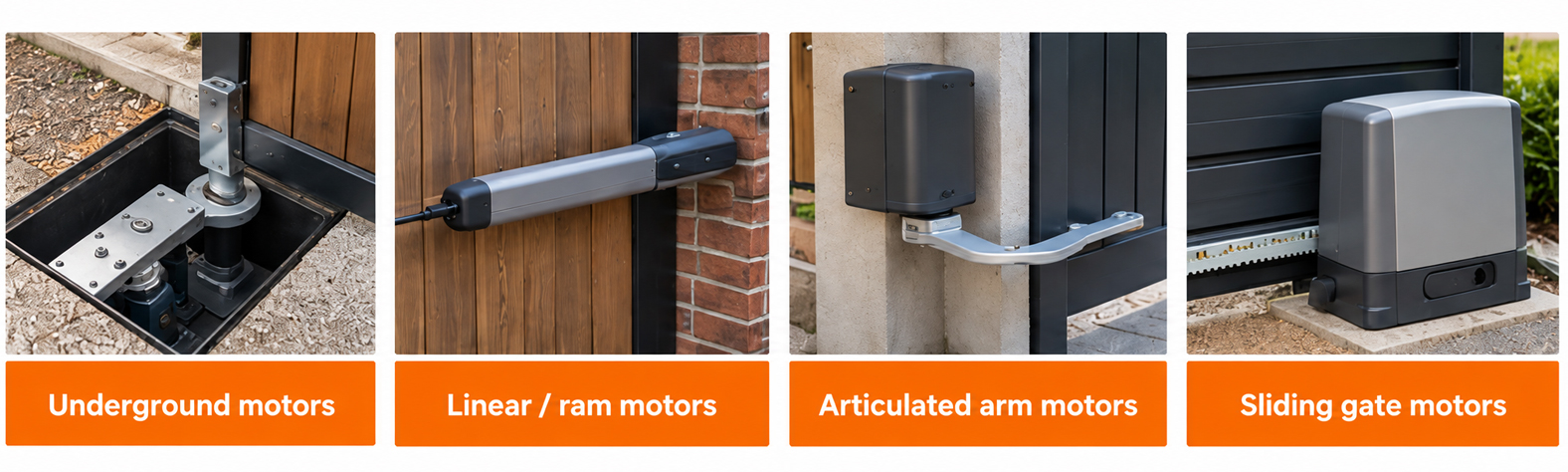
Underground Motors: Hidden beneath the gate, ideal where appearance is important.
Linear / Ram Motors: Mounted between the post and the gate leaf. A popular solution for residential gates.
Articulated Arm Motors: Useful for gates with large or deep posts where a linear motor may not be suitable.
Sliding Gate Motors: Installed beside the gate and used with a toothed rack to move the gate horizontally.
How Do I Choose the Right Automation for My Existing Gates?
Choosing the right motor isn't just about whether you have swing or sliding gates. The size and weight of the gate, the type and depth of the posts, how frequently the gates will be used and the space available for installation can all affect which system is most suitable.
This is why it's worth checking your gates carefully before purchasing an automation kit. A little preparation at the start can help you avoid choosing a motor that isn't suitable for your particular installation.
So, Can I Automate My Existing Gates?
In many cases, yes. If your gates are structurally sound, correctly aligned and operate smoothly by hand, there's a good chance they can be automated without needing to replace them.
Where gates need a little attention first, repairs or adjustments to hinges, posts, rollers or alignment may be all that's required before automation can be considered.
Need Help Choosing the Right Gate Automation?
Not sure which motor or automation kit is right for your existing gates? We're here to help.
Choosing the right system depends on several factors, including the type, size and weight of your gates, the gate posts and the space available for installing the motors.
If you'd like some help narrowing down your options, complete our Swing Gate Site Assessment Form or Sliding Gate Site Assessment Form with a few details about your gates and installation. You can also include photographs to help our team get a better understanding of your setup.
Once we have the information, the GateMotors team can help identify suitable automation options and point you in the right direction.
Alternatively, you can browse our range of electric gate automation kits to explore the different options available.