Electric Gate Safety: What Safety Devices Do You Need?
Electric gates offer convenience, security and easy access to your property, but safety should always be a priority when planning an automated gate system.
Unlike manual gates, automated gates move under motor power, creating potential hazards if people, vehicles or objects come into contact with them.
Whether you're installing a new electric gate or upgrading an existing system, choosing the right safety equipment is an essential part of the process.
So, what safety devices are available, how do they work, and does every electric gate need the same protection?
Why Is Electric Gate Safety Important?
Automated gates can create crushing, trapping, shearing and impact hazards as they open and close.
These risks aren't limited to the area directly in front of the gate. Hazards can also occur around hinges, posts, closing edges and areas where a moving gate passes a fixed object.
In the UK, powered gate installations must meet applicable safety requirements. A site-specific risk assessment is essential to identify potential hazards and determine the appropriate protective measures.
Safety devices help reduce these risks, but they must be correctly selected, positioned and tested to ensure they provide effective protection.
For further guidance, Gate Safe is a UK charity dedicated to raising awareness of automated gate safety, providing useful advice for gate owners and installers.
What Are Safety Photocells?
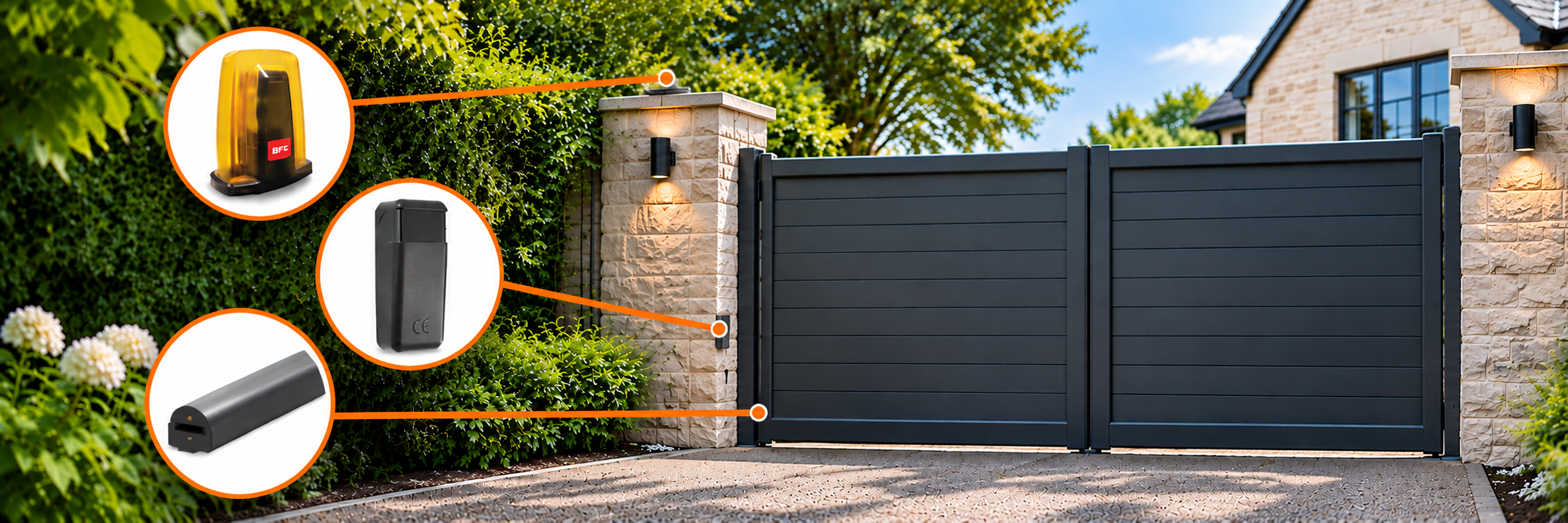
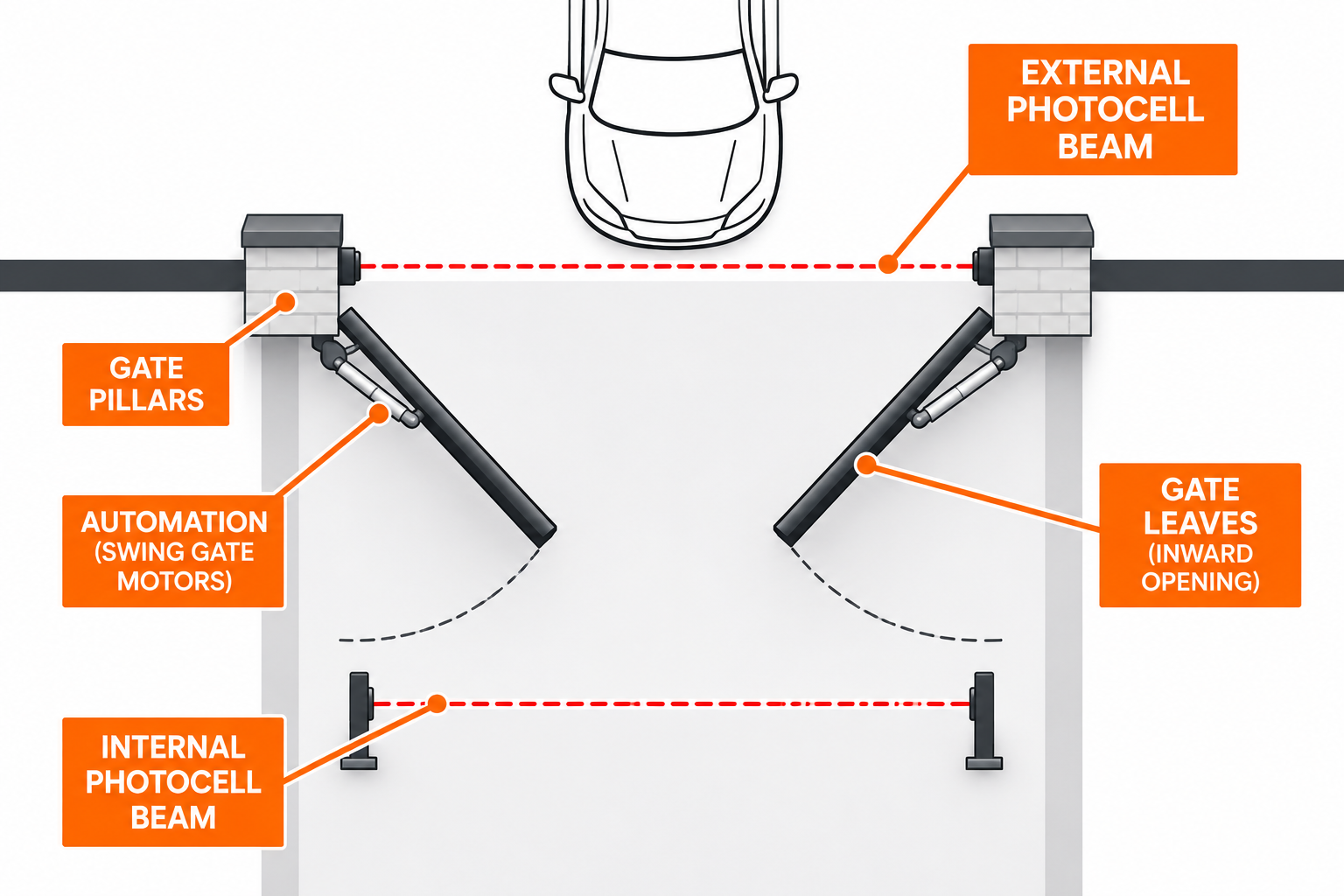
Safety photocells are commonly used on automated gates to detect when a person, vehicle or object interrupts an infrared beam.
They typically consist of a transmitter and receiver positioned opposite one another, often on gate pillars or posts.
When the beam is interrupted, the gate control system responds according to its configuration, for example by preventing the gate from closing or reversing its movement.
Photocells are particularly useful for detecting obstructions across a driveway entrance.
However, photocells alone do not make an electric gate safe. They only monitor the area covered by their beam and may not detect every potential hazard.
What Are Electric Gate Safety Edges?
Safety edges are pressure-sensitive devices fitted to selected parts of an automated gate where contact could create a crushing or trapping hazard.
They typically consist of a flexible rubber profile containing a sensing element.
When the edge is compressed, it sends a signal to the gate control system, which responds by stopping or reversing movement, depending on the system configuration.
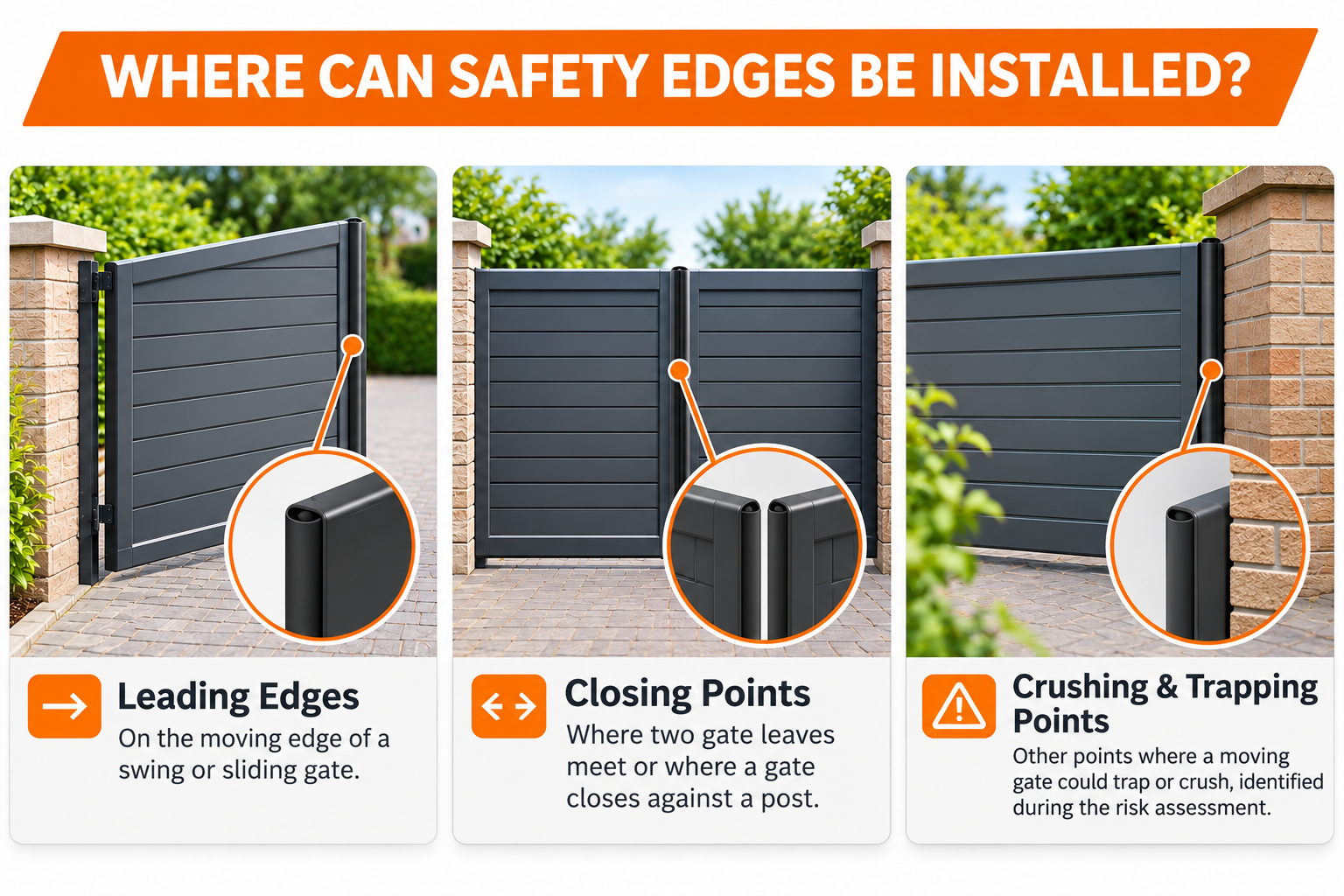
Safety edges may be installed on:
-
Leading edges of swing or sliding gates.
-
Closing points where the gate meets a post or another gate leaf.
-
Other hazardous edges identified during the risk assessment.
The number and position of safety edges depend on the gate design and the hazards present.
They are particularly important where people could become trapped between a moving gate and a fixed surface.
What About Obstacle Detection and Blinker Lights?
Many modern gate automation systems include obstacle detection, which monitors motor force or other operating parameters to help identify resistance during movement.
If an obstruction is detected, the control system may stop or reverse the gate.
However, obstacle detection must be correctly configured and its performance verified. Motor force limitation alone may not provide adequate protection against every hazard.
Blinker lights are another common accessory. These provide a visual indication that the gate is operating or about to move, depending on the system.
Although useful for alerting people to gate movement, blinker lights are not a substitute for appropriate protective safety devices.
Does Every Electric Gate Need the Same Safety Devices?
No. Every gate installation is different, and the safety equipment required will depend on the hazards identified.
For example, a pair of residential swing gates may present different risks from a large commercial sliding gate.
Factors to consider include:
-
Whether the gates swing or slide.
-
The size, weight and construction of the gates.
-
The proximity of walls, fences and gate posts.
-
Areas where crushing, trapping or shearing could occur.
-
How frequently the gates are used and who can access the area.
A risk assessment should be carried out by a competent person, with appropriate protective measures selected for the installation.
Once installed, safety systems must also be tested and maintained to ensure they continue to operate correctly.
Why Is Regular Safety Maintenance Important?
Even a correctly installed electric gate requires ongoing inspection and maintenance.
Over time, components can become damaged, misaligned or obstructed, potentially affecting the performance of the safety system.
Routine checks should include the condition of photocells, safety edges and other protective equipment, alongside the gate's mechanical operation.
Safety devices should never be bypassed to overcome an operating fault. If a gate is behaving unexpectedly or a safety device is damaged, the system should be assessed by a competent gate professional.
Need Help Choosing Electric Gate Safety Equipment?
Choosing the right safety equipment is an important part of creating a reliable, compliant electric gate installation.
At GateMotors, we supply a range of safety accessories, including photocells, safety edges and blinker lights, to support different gate automation systems.
Explore our range of gate safety accessories, or contact the GateMotors team if you need help identifying suitable products for your installation.
Remember, safety equipment should always be selected as part of a site-specific risk assessment and installed and tested by a competent person.