Above-Ground vs Underground Swing Gate Motors
If you're planning to automate a swing gate, one of the first decisions is whether to use an above-ground or underground gate motor.
Both can provide effective and reliable gate automation. The main differences are where the motor is installed, how visible it is, the type of installation required and how well it suits the gate and surrounding area.
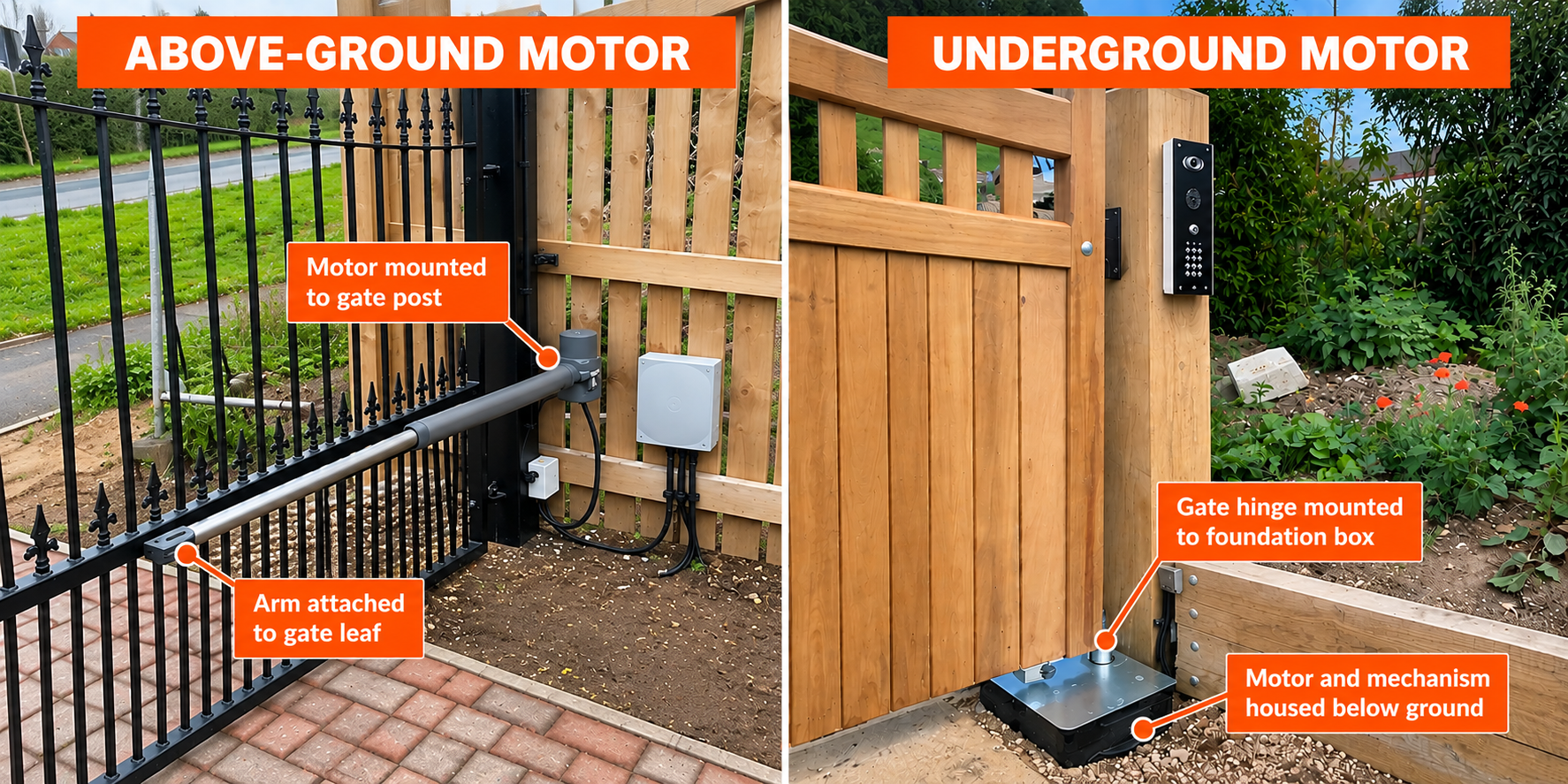
Above-ground motors are mounted between the gate and post, while underground motors sit in a foundation box beneath the hinge point.
So, which should you choose? Here's what to consider.
What Types of Swing Gate Motors Are Available?
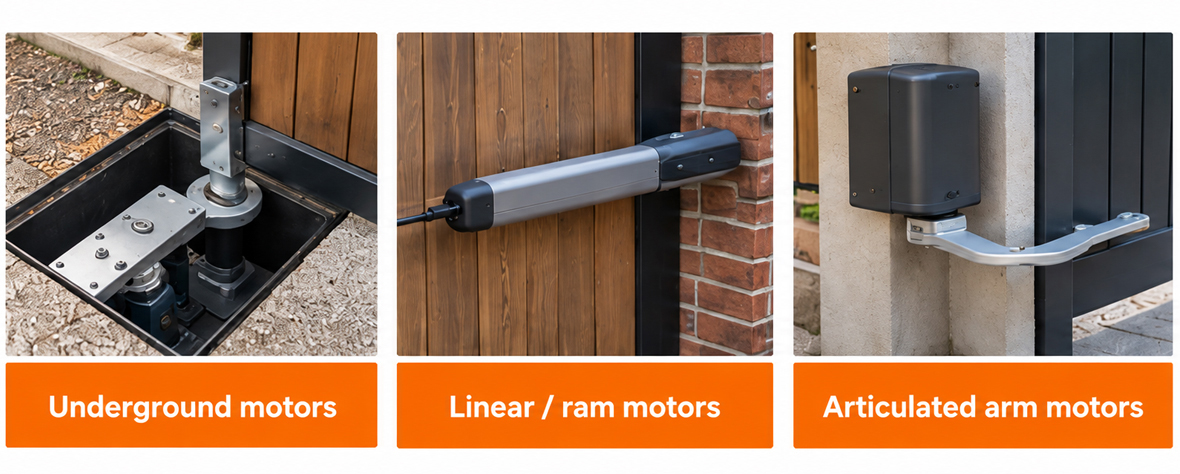
Swing gate motors generally fall into three main types: underground, linear / ram and articulated arm motors.
Underground Motors
An underground motor sits inside a foundation box beneath the gate hinge.
Because most of the automation is below ground, this provides a discreet finish and keeps the appearance of the gate largely unchanged.
The foundation box and hinge position need to be accurately installed together, so underground motors are often considered when planning new gates or when an existing gate installation is being altered.
Linear / Ram Motors
A linear motor is mounted between the gate post and gate leaf. It extends and retracts to push and pull the gate open and closed.
They're widely used on swing gates, but the position of the hinge in relation to the post is important. The motor needs suitable mounting geometry and enough room to operate through the required opening angle.
Articulated Arm Motors
An articulated arm motor also sits above ground but uses a jointed arm to move the gate.
The jointed design can make it particularly useful on wide posts or pillars where the gate hinge is positioned further back from the front face.
Where there isn't suitable geometry for a straight linear motor, an articulated arm system may provide an alternative.
Above-Ground vs Underground Gate Motors: What's the Difference?
The right option depends on the individual installation rather than one motor type being better than another.
| Above-Ground Motors | Underground Motors | |
| Position | Mounted to the gate and post | Installed beneath the gate hinge |
| Appearance | Motor remains visible | Most of the automation is hidden |
| Installation | Mounted above ground | Requires a foundation box and groundwork |
| Gate Posts | Motor choice depends on post and hinge geometry | Motor operates from the hinge point |
| Maintenance Access | Motor is directly accessible | Accessed through the foundation box |
| Drainage | No underground motor box | Suitable drainage around the box is important |
| Existing Gates | Can often be added to a suitable existing gate | Existing hinge arrangement may need alteration |
| New Gates | Can be incorporated into the design | Can be planned into the gate and hinge arrangement from the outset |
Why Choose an Above-Ground Gate Motor?
Above-ground automation is available in a wide range of linear and articulated arm designs, making it suitable for many different swing gate installations.
Because the motor is mounted directly to the gate and post, there's no need to install a motor box beneath the hinge.
The motor also remains accessible for servicing or adjustment.
The main consideration is installation geometry. The position of the hinge, depth of the post and available mounting space all influence which type of above-ground motor can be used.
For example, a linear motor may work well where the hinge and post dimensions provide suitable mounting points, while an articulated arm motor can accommodate some deeper posts and pillars.
If you're comparing different above-ground options, our Swing Gate Buying Guide explains some of the measurements involved.
Why Choose an Underground Gate Motor?
Underground automation is particularly useful where maintaining the appearance of the gate and entrance is important.
The motor is housed beneath the hinge, so there isn't a motor mounted across the back of the gate.
This can work particularly well with decorative metal gates, traditional entrances or contemporary installations where a discreet finish is part of the overall design.
Underground systems do require additional preparation below ground. A foundation box needs to be positioned accurately at the hinge point and suitable drainage needs to be incorporated into the installation.
When gates and automation are being planned together, the hinge arrangement and underground motor can be considered as part of the same design.
For double swing gates, each gate leaf will normally have its own motor and foundation box.
Can You Fit an Underground Motor to an Existing Gate?
Yes, an existing gate can sometimes be fitted with underground automation, but the suitability of the existing hinge arrangement needs to be assessed first.
An underground motor operates at the gate's pivot point. If an existing gate wasn't originally designed around an underground motor, alterations may therefore be required to accommodate the foundation box and new hinge arrangement.
How much work is involved will depend on the gate, posts, hinges and surrounding ground.
Above-ground motors can also be fitted to many existing gates, provided the gate is in good condition and the post and hinge geometry is suitable.
So if you're automating gates that are already installed, it's worth assessing both options rather than choosing solely on the location of the motor.
Our guide Can I Automate My Existing Gates? covers the checks worth making before adding automation.
Which Type of Swing Gate Motor Should I Choose?
Start with the gate and installation rather than the motor itself.
Consider:
- Are the gates new or already installed?
- What are the width and approximate weight of each gate leaf?
- Where is the hinge positioned on the post or pillar?
- How deep is the post or pillar?
- How much space is available for the motor?
- How important is keeping the automation out of sight?
- What is the ground like around the hinge area?
- How frequently will the gates operate?
If you're planning new gates, you have the advantage of being able to consider the gate, hinges and automation together. This gives you the opportunity to explore both above-ground and underground systems from the outset.
If you have existing gates, their current condition and geometry will help determine the options available. Depending on the installation, that could mean a linear motor, articulated arm motor or underground system.
For deeper posts and pillars, an articulated arm motor may offer useful mounting flexibility.
Where appearance is a priority and the installation allows for the required groundwork and drainage, underground automation provides a discreet alternative.
Most importantly, whichever style you choose, the motor must be correctly sized for the gate's width, weight and expected usage.
If you're planning an entirely new installation, our guide to planning an electric gate system from scratch takes you through the wider process.
Frequently Asked Questions
Are underground gate motors better than above-ground motors?
Neither is inherently better. They suit different installations. Above-ground motors offer accessible installation options in linear and articulated arm designs, while underground motors provide a discreet finish with the automation housed beneath the gate.
The right choice depends on the gate, hinge geometry, surrounding ground and your priorities for the finished installation.
Do underground gate motors need drainage?
Yes. Suitable drainage is an important part of an underground gate motor installation because water shouldn't be allowed to collect around the motor and foundation box.
Drainage should therefore be considered when planning the installation rather than after the motor has been fitted.
Can I use an articulated arm motor on a large gate post?
Articulated arm motors can be particularly useful where a gate hinge is set back on a deep post or pillar. The jointed arm allows the motor to work with some installation geometries that may not suit a straight linear motor.
The individual motor still needs to be suitable for the gate's dimensions and weight.
Are underground gate motors completely hidden?
The motor itself is housed beneath the gate in a foundation box, making the automation much less visible than an above-ground motor.
The installation isn't literally invisible, as components associated with the hinge and foundation box will still be present, but the motor isn't mounted across the gate or post.
Can both single and double swing gates use underground motors?
Yes. Underground automation can be used on both single and double swing gates, subject to the individual gate and installation being suitable.
On a double swing gate, each gate leaf will normally require its own underground motor and foundation box.
Need Help Choosing a Swing Gate Motor?
If you're not sure whether a linear, articulated arm or underground motor is right for your gates, the GateMotors team can help you narrow down the options.
Motor choice depends on more than whether you want the automation above or below ground. Gate width and weight, post dimensions, hinge position, available space and expected usage all need to be considered.
Complete our Swing Gate Site Assessment Form and provide the measurements and photographs of your installation. Our team can use this information to help identify suitable options for your gates.