4G vs WiFi Gate Intercoms: Which is Right for Your Property?
Choosing the right intercom is an important part of planning an electric gate system. Whether you're installing new gates or upgrading an existing entrance, an intercom allows you to communicate with visitors and control access to your property.
Modern video intercoms can also connect to your smartphone, allowing you to see who's at the gate, speak to visitors and grant access even when you're away from home.
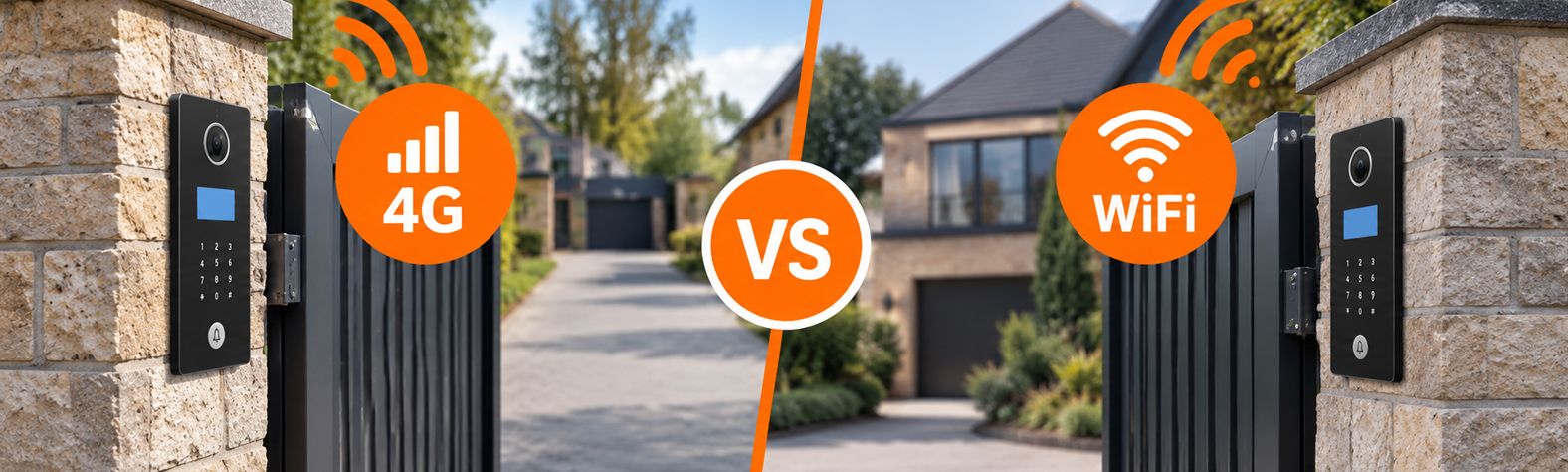
But should you choose a 4G or WiFi gate intercom? Both offer convenient access control, but the way they connect can make a big difference to which system is suitable for your property.
How Does a WiFi Gate Intercom Work?
A WiFi gate intercom connects to your property's existing wireless internet network, allowing it to communicate with your smartphone through a compatible app.
When someone presses the call button, you receive a notification and can speak to the visitor, view live video and open the gate remotely, depending on the system.
WiFi intercoms can be a good option for properties where a strong, reliable wireless signal is available at the gate entrance.
However, distance, walls and other obstacles can affect connectivity. If your gates are positioned further away, you may need additional networking equipment to extend the signal.
How Does a 4G Gate Intercom Work?
Unlike WiFi systems, a 4G gate intercom uses a mobile data network to connect to the internet.
These systems typically use a compatible SIM card, allowing the intercom to communicate with your smartphone without relying on your property's broadband connection.
This makes 4G intercoms particularly useful for longer driveways, remote entrances or properties where installing network cabling would be difficult.
However, a reliable 4G signal is essential, and you'll usually need to factor in the ongoing cost of a SIM card or data plan.
Both WiFi and 4G systems still require a suitable power supply at the entrance.
4G vs WiFi Gate Intercoms: What's the Difference?
Although both systems offer similar convenience, there are some important differences to consider.
| Feature | WiFi Intercom | 4G Intercom |
| Connectivity | Existing WiFi network | Mobile data network |
| SIM card required | No | Usually |
| Ongoing costs | Existing broadband | SIM/data plan |
| Long driveways | May need WiFi extension | Suitable with good 4G coverage |
| Smartphone access | Yes, on compatible models | Yes, on compatible models |
| Power supply | Required | Required |
Neither option is necessarily better than the other. The most suitable choice depends on the connectivity available at your gate entrance.
Which Gate Intercom Should You Choose?
Before choosing an intercom, consider the distance between your property and the gate, the available network coverage and how you intend to use the system.
A WiFi intercom may be suitable if:
- Your gates are close to the house.
- You have a strong, reliable WiFi signal at the entrance.
- You want to use your existing broadband connection.
A 4G intercom may be suitable if:
- Your entrance is a considerable distance from the property.
- WiFi coverage is limited or unavailable.
- You have reliable 4G coverage at the gate.
- You would prefer not to install additional network cabling.
It's also worth considering a wired IP/LAN intercom. These connect directly to your property's network using an Ethernet cable and can provide a reliable alternative where suitable cabling is available.
If you're planning a new installation, considering your intercom alongside the gate automation, power supply and access control requirements can help avoid unnecessary work later.
For more advice on planning your installation, take a look at our How to Plan an Electric Gate System From Scratch guide.
Need Help Choosing the Right Gate Intercom?
Choosing between a 4G, WiFi or wired IP intercom comes down to finding a reliable connection that suits your property and how you intend to manage access.
At GateMotors, we offer a range of intercom systems for residential and commercial installations, with options to suit different connectivity and access control requirements.
Explore our range of intercom systems and access controls, or get in touch with the GateMotors team if you need advice on choosing the right system.